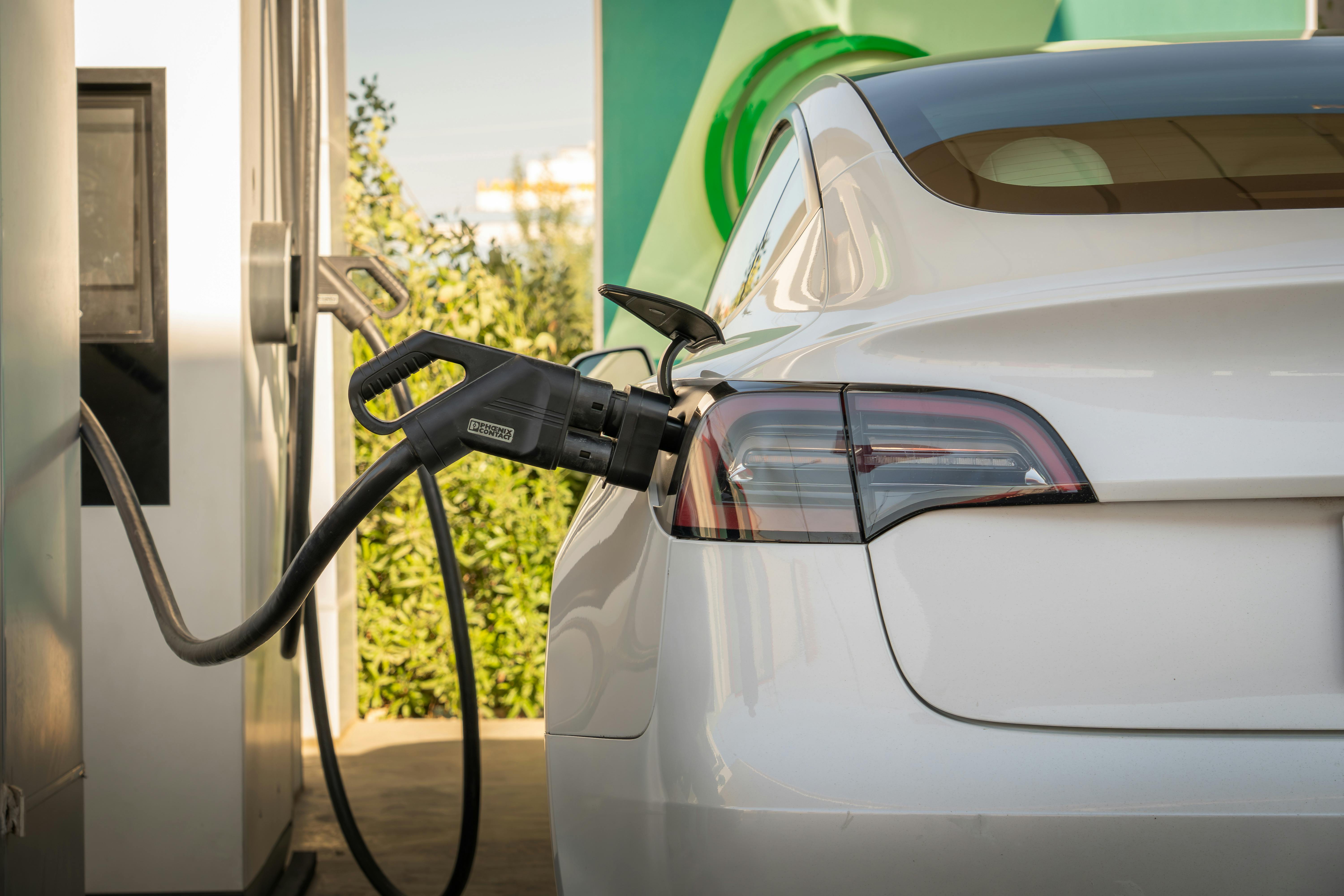
Electric vehicles are one of the best investments a European household can make — but only if you charge them correctly. The vast majority of EV owners plug in as soon as they pull into the driveway, typically between 17:00 and 20:00. That window is, almost without exception, the most expensive time to draw power from the grid.
This article quantifies exactly how much that habit costs, explains why it happens, and shows how intelligent charging schedules — managed automatically by software like BillBuster — can recover most of that money without requiring you to change anything about your daily routine.
Key finding: A typical EV owner in central Europe charging unmanaged at home pays €300–€600/year more than necessary — simply because they charge at peak price hours. Smart scheduling eliminates most of this premium at zero inconvenience.
The Peak Price Problem
European wholesale electricity markets — ENTSO-E, EPEX SPOT, and national day-ahead markets — price electricity in hourly blocks. The pattern is remarkably consistent across countries and seasons: prices are low overnight (23:00–07:00), moderate during working hours (08:00–16:00), and high to very high during the evening peak (17:00–21:00).
The evening peak is driven by simultaneous demand from cooking, heating, and lighting across millions of households — combined with reduced solar output after sunset and limited dispatchable capacity. Grid operators must pay a premium for fast-response gas peakers to meet this demand, and that cost flows through to spot prices.
For EV owners, the irony is stark: you've made an environmentally progressive purchase, but your charging behaviour is maximising the grid's dirtiest, most expensive generation window every single evening.
How Much Are You Actually Paying?
Let's ground this in numbers. A mid-range EV — say a 60 kWh battery with a realistic range of 300 km — consumes roughly 20 kWh per 100 km. A household driving 1,500 km/month charges approximately 300 kWh at home.
| Charging Scenario | Avg Price (€/kWh) | Monthly Cost (300 kWh) | Annual Cost |
|---|---|---|---|
| Unmanaged (evening peak) | €0.148 | €44.40 | €532 |
| Flat regulated tariff | €0.105 | €31.50 | €378 |
| Smart overnight (spot) | €0.041 | €12.30 | €147 |
| Smart vs. unmanaged saving | — | €32.10 | €385/year |
These figures use actual ENTSO-E day-ahead data for Slovenia averaged over Q1–Q2 2025. Markets in Germany, Austria, and the Netherlands show similar patterns with marginally higher peak premiums.
Why Most EV Owners Don't Schedule Charging
Car manufacturers do offer scheduled charging via their apps. So why don't more owners use it? From conversations with over 60 beta households, the barriers are predictable:
- It's manual. You set a fixed schedule (e.g., "charge from 02:00–06:00") that doesn't adapt to real-time prices or the next day's solar forecast.
- No integration with the home battery. Charging the car from your battery during cheap windows requires coordinating two separate systems.
- Trip flexibility. A fixed overnight schedule fails when you need a full charge by 07:00 for an unexpectedly long drive.
- Cognitive overhead. Monitoring the price calendar, adjusting schedules, and dealing with edge cases is a part-time job.
This is precisely the problem BillBuster is designed to solve. Our AI monitors day-ahead and intraday spot prices, checks your stated departure time, evaluates your home battery's state of charge, and dispatches EV charging to the cheapest available window — automatically, every day.
BillBuster in Practice: A Beta Household
One beta household in Maribor drives a 2023 Volkswagen ID.4 and averages 1,200 km/month. Before BillBuster, their wallbox drew power every evening around 18:30 when both adults returned from work.
After connecting BillBuster to their wallbox and home battery system, the AI shifted 83% of charging sessions to overnight windows between 01:00 and 06:00, with the remaining 17% filled by solar surplus during midday on weekends and remote-work days.
Their EV charging cost dropped from €19.20/month (at peak evening prices) to €7.80/month (averaged across cheap overnight and solar windows) — a saving of €11.40/month, or €136.80/year, from this optimisation alone.
V2H and V2G: The Next Frontier
Vehicle-to-home (V2H) and vehicle-to-grid (V2G) technologies allow compatible EVs to discharge back into the home or grid during peak periods, functioning as an additional mobile battery. BillBuster is building support for bidirectional charging protocols, starting with ISO 15118-20 (the Plug & Charge standard used by newer Hyundai, Kia, and Nissan vehicles).
When V2H is active, the EV effectively doubles the household's dispatchable storage capacity during evening peaks — further reducing the cost per kWh and creating a potential revenue stream from grid balancing services.
What You Need to Get Started
To benefit from smart EV charging optimisation with BillBuster, you need:
- A home wallbox with smart control capability (OCPP 1.6 or 2.0 compatible — most 2022+ wallboxes qualify)
- A dynamic electricity tariff or direct market access (BillBuster can help arrange this)
- Optionally, a home battery system — though EV optimisation works standalone
If you have a home battery and solar installation, BillBuster coordinates all three assets together — which is where the full savings potential is realised. The EV, battery, and solar panels become one integrated system rather than three independently operating devices.
Join our beta programme to get early access and lifetime complimentary access before we open to the broader market in Q4 2025.